
Diamond Open Access Conference
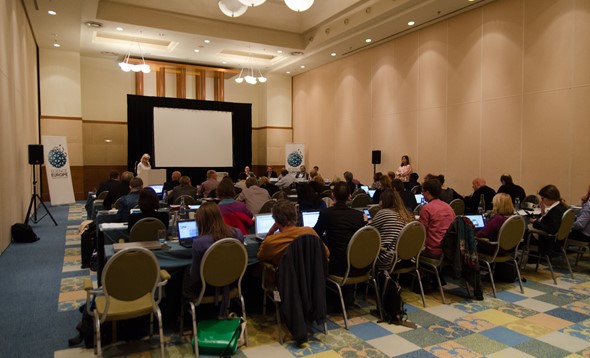
Science Europe, OPERAS, cOAlition S, and ANR organised a first conference on Diamond Open Access to discuss operationalisation of the Action Plan for Diamond Open Access and to introduce the DIAMAS project.
Member-only content is available on this page. Please log in to view this content.
58 item(s) found
Science Europe, OPERAS, cOAlition S, and ANR organised a first conference on Diamond Open Access to discuss operationalisation of the Action Plan for Diamond Open Access and to introduce the DIAMAS project.
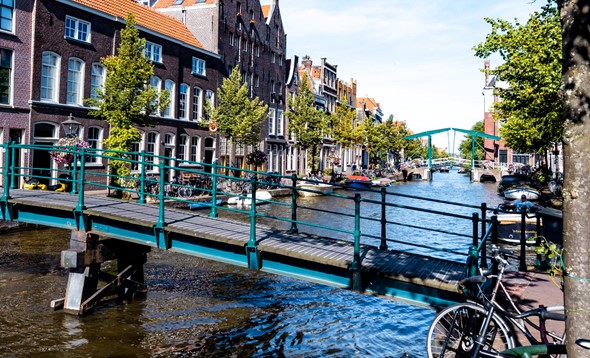
For Science Europe, 2021 was a very important year: the association celebrated its 10th year of existence. Founded in 2011, it has grown into a respected and influential voice in the European research policy debate. Moreover, we published a new Strategy Plan for 2021–2026, which maps our collective objectives and sets a specific yet flexible action framework over the next five years.
Science Europe will contribute to the EuroScience Open Forum (ESOF) 2022 with sessions on several key topics: the green and digital transition, research careers, open science, and the reform of research assessment systems.
Science Europe welcomes the Council Conclusions on research assessment and open science as they recognise the need for a renewed approach to research policies and practices to evolve towards a more positive research culture.
Science Europe welcomes the DFG position paper "Academic Publishing as a Foundation and Area of Leverage for Research Assessment" on two important and timely topics.
Together with cOAlition S, OPERAS, and ANR, Science Europe organised the first webinar for the organisations and individuals who endorsed the 'Action Plan for Diamond Open Access'. Since its launch, it has been endorsed by over 80 organisations and more than 50 individuals.
Thierry Damerval is the President and CEO of the French National Research Agency (ANR), as well as a Member of the Science Europe Governing Board. Secretary Lidia Borrell-Damián spoke with him on 15 March in relation to the French Presidency of the Council of the EU in the first half of the year.
Science Europe, cOAlition S, OPERAS, and ANR organise a webinar on 22 April for the endorsers of the Action Plan for Diamond Open Access to gather their views on the next steps.
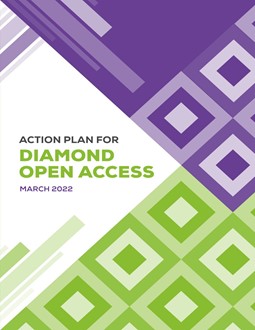
Science Europe, cOAlition S, OPERAS, and the French National Research Agency (ANR) present an Action Plan to further develop and expand a sustainable, community-driven Diamond OA scholarly communication ecosystem.
Science Europe, cOAlition S, OPERAS, and ANR organised a workshop to discuss best practices, develop the central elements of ‘Diamond’ Open Access, and adopt an Action Plan to be presented at the Open Science European Conference on 4–5 February 2022.
We are pleased to announce that Science Europe is now issuing Digital Object Identifiers (DOIs) for its publications and depositing its publications on the Zenodo platform.
The Science Europe General Assembly adopted the creation of a new working group on Open Science (WG OS) to develop a comprehensive approach towards the topic. WG OS will provide a platform to bring together the Open Science aspects embedded in all activities of Science Europe. It will also broaden the scope of our work in the area, to fulfill the objectives described in the new Science Europe Strategy and Multi-annual Action Plan.
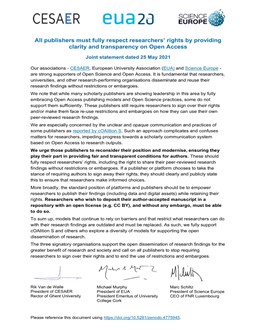
Released in partnership with CESAER and the European University Association (EUA) this joint statement outlines how all publishers must fully respect researchers’ rights by providing clarity and transparency on Open Access.
CESAER, the European University Association (EUA), and Science Europe call on all publishers to fully respect researchers’ rights and to end the use of restrictions and embargoes.
This briefing paper aims to support decision makers at research organisations and research funders to develop new monitoring exercises or assess and improve existing processes to measure the Open Access status of publications.
Science Europe and cOAlition S publish an in-depth report and recommendations arising from a study of community-driven Open Access journals across the world that are free for readers and authors, usually referred to as 'OA diamond journals'.
Science Europe and cOAlition S are pleased to announce the publication of an in-depth report and recommendations arising from a study of community-driven Open Access journals across the world that are free for readers and authors, usually referred to as 'OA diamond journals'.
The 20 and 21 November 2019 Science Europe Workshop on Digital Transformation in Scholarly Communication explored how new possibilities and technologies provided by the digital transformation can impact the future of the scholarly publication process.
So far, much of the focus of the transition towards Open Access has been on scholarly and scientific articles. However, a significant number of disciplines, notably – but not only – within the Social Sciences, the Arts, and the Humanities produce and heavily use books. This briefing paper identifies the key issues at stake in implementing a policy of Open Access to academic books, and outlines recommendations for different stakeholder groups to facilitate and accelerate such a policy.
Today cOAlition S releases revised guidance on Plan S implementation which has been approved by all coalition members. “Plan S is a bold step forward which the European Commission, along with a growing number of national funders, is committed to implement” explained Carlos Moedas, the European Commissioner for Science, Research and Innovation.
Researchers and research funders have a collective duty of care for the science system as a whole. The current publication paywalls withhold a substantial amount of research results from a large fraction of the scientific community and from society as a whole.
‘Big Deals’ are one of the dominant but highly-disputed business models in academic publishing. The model needs to be further analysed before it can be used as an instrument to implement and increase Open Access. This workshop was as organised to trigger further expert discussions on the current business models and consider the available alternatives.
This open letter issued by the international research community calls on Members of the European Parliament to halt the adoption of harmful provisions found in the current draft of the Directive on Copyright in the Digital Single Market, which could threaten Open Access and Open Science.
Science Europe is committed to playing a role in accomplishing the transition to Open Access in an efficient and sustainable way and encourages scientific institutions to disclose payments of Open Access publication fees by participating in the ‘Open APC Initiative.’ This paper highlights how this will help create a more transparent cost structure in the Open Access publication market and stimulate competition.