Ensuring Collaboration with Non-EU Countries to Build Stronger European Research and Innovation
Science Europe's Statement on the Participation of Associated Countries in Horizon Europe’s Pillar II
Member-only content is available on this page. Please log in to view this content.
185 item(s) found
Science Europe's Statement on the Participation of Associated Countries in Horizon Europe’s Pillar II
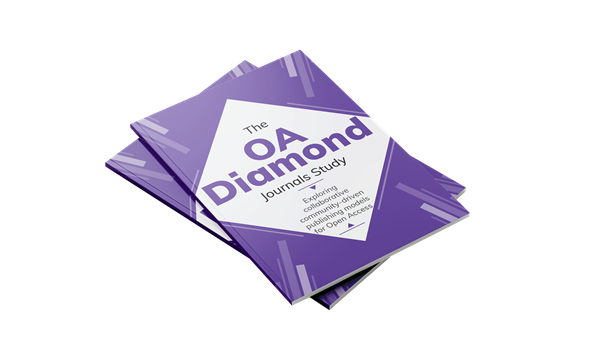
Science Europe and cOAlition S are pleased to announce the publication of an in-depth report and recommendations arising from a study of community-driven Open Access journals across the world that are free for readers and authors, usually referred to as 'OA diamond journals'.
For International Women's Day 2021 we asked the women members of our Governing Board about their own experiences as women leaders and discussed what is or can be done to improve gender equality in research.
Twelve Science Europe members launch Weave, a cross-European initiative to fund and support excellent international research projects. It is the first time that such a large number of funders develop an initiative to facilitate structured bilateral and trilateral scientific cooperation.
One of the core purposes of research is the quest for and creation of new knowledge. Current research assessment processes were analysed in detail by Science Europe in its 2019/2020 study.
On 14 January 2021, Science Europe and the German Research Foundation (DFG) co-hosted the Global Research Council seminar on COVID-19 for the European region.
2021 will see a busy start for Science Europe’s priority area ‘Research Data’ with two online events organised in the first few weeks of the year.
Thank you for the support you have shown towards Science Europe in 2020. It has been an unprecedented year for all of us where the spotlight shone brighter than ever on the importance of research and collaboration.
On behalf of the Science Europe Office, best wishes for the Holiday Season and for the New Year. We look forward to working together in 2021.
The international research community rallies together to defend Swedish–Iranian researcher Dr Ahmadreza Djalali.
Between 23 and 27 November, Global Research Council (GRC), UK Research and Innovation, Research England, and the National Research Foundation (South Africa) jointly hosted a conference addressing the concept of responsible research assessment.
The 2020 edition of the annual High Level Workshop on ERA explored how research and innovation can contribute to the recovery from the COVID-19 crisis and to societal resilience, in the context of an evolving research culture.
The Global Research Council (GRC) is convening a conference on Responsible Research Assessment to promote global discussion on how research organisations can drive a positive research culture through research assessment criteria and processes. The event, organised by UKRI, Research England, the National Research Foundation (South Africa), and the GRC will be held remotely on November 23–27.
Together with LERU, EUA, EARTO, and the Vice-Presidents of the European Research Council (ERC), we join MEP Christian Ehler from the EEP Group in his call to match the Green & Digital goals with a budget fit for this age.
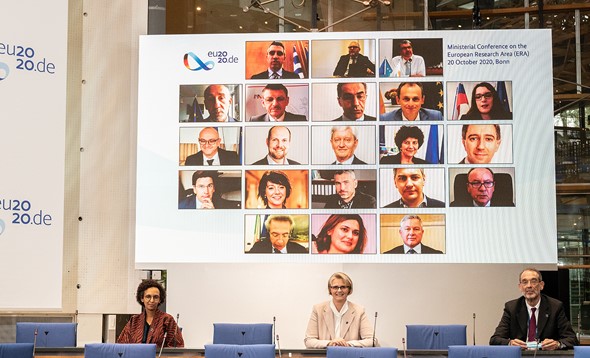
Science Europe welcomes the adoption of the Bonn Declaration on ‘Freedom of Scientific Research’ at today’s Ministerial Conference on the European Research Area in Bonn. Academic freedom is of utmost importance for democratic societies to continue building Europe’s resilience.
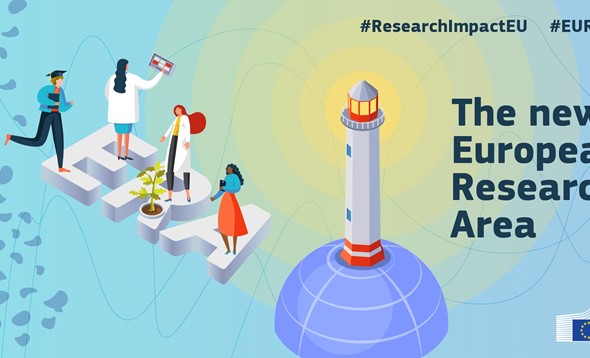
Science Europe welcomes the European Commission’s ambitious Communication for ‘A New ERA for Research and Innovation.’ To further strengthen Europe’s world-leading research, a strong ERA is essential and must be based on research excellence, international collaboration, openness, inclusiveness, and academic freedom.
Science Europe welcomes the European Commission’s ambitions for digital and green transformation as highlighted by President von der Leyen today.
Science Europe encourages the EU to keep leading projects to tackle the challenges brought on by COVID-19 and offers the expertise and experience from its members to build the necessary collaborative approaches.
It is with great sadness that Science Europe learned of the passing of the ERC Executive Agency's Theodore Papazoglou earlier this week. Many of the colleagues at Science Europe met or worked with Theodore at different points during his many years at the ERC.
Amid the many European Commission programmes to foster research and innovation, the European Research Council (ERC) stands out as the programme based on scientific excellence and following a bottom-up approach. Science Europe fully endorses these principles as a part of a variety of different approaches to research and innovation investments.
At a time when the expectations on research are very high and the safeguarding of public trust in Science is cardinal, we deeply regret that internal issues within the ERC have been played out so publicly. This may be damaging to the ERC as an institution.
Science Europe has always been a strong supporter of the ERC and we will continue to be so in the future. We look forward to collaborating with the next ERC President.

Science Europe congratulates Ursula von der Leyen for her election as President of the European Commission (EC) and confirms its full support to Mariya Gabriel, new Commissioner for Innovation, Research, Culture, Education and Youth, following the approval of the new College of Commissioners by the European Parliament.
Science Europe held its 18th General Assembly in Brussels, today. Marc Schiltz, the outgoing President, has been re-elected for a second mandate. He is joined by Ingrid Petersson (Director General of the Swedish Research Council for Sustainable Development- FORMAS) and by Rosa Menéndez (President of the Spanish National Research Council- CSIC) as Vice-Presidents. The new Governing Board gathers 13 members, from across the entire membership.
Science Europe joins 300+ organisations in call to EU decision-makers to pledge ambitious EU Budget on vital R&I.
Our Practical Guide to the International Alignment of Research Data Management was officially release in January 2019. Ten months later, the guide’s recommendations have found their way into a number of organisational and, in some cases, even national Open Science or data management policies.