High Level Workshop on ERA 2026
The 2026 High Level Workshop is co-organised with FWO and NWO. Topic for discussion is 'Dual Use and Defence-related & Security Research'.
Member-only content is available on this page. Please log in to view this content.
62 item(s) found
The 2026 High Level Workshop is co-organised with FWO and NWO. Topic for discussion is 'Dual Use and Defence-related & Security Research'.
The 2026 Regional European meeting of the Global Research Council (GRC) is jointly organised by Research Council of Lithuania (LMT), UK Research and Innovation (UKRI), and Science Europe, to prepare for the 2027 GRC Annual Meeting in Cape Town, South Africa.
As part of its efforts to support the Ukrainian research ecosystem during the ongoing war, Science Europe and NRFU are jointly organising three online workshops between September 2025 and February 2026 to address the current priority areas for Ukrainian research.
This webinar explored the potential of rapid and living evidence synthesis to support timely, credible, and accessible scientific knowledge for environmental decision-making. It examined how these approaches can help research organisations, policy-makers, and other stakeholders make informed decisions, identify knowledge gaps, and enhance the uptake of evidence in practice, particularly in the context of climate resilience and sustainable development.
A public webinar to discuss the crucial importance of integrating Equity, Diversity, and Inclusion (EDI) measures in research systems and processes.
The Global Summits on Diamond Open Access are pivotal gatherings that bring together stakeholders from around the globe to advance a community-led scholarly publishing model without financial barriers for authors or readers. The third Global Summit takes place from 2–6 February 2026 in Bengaluru, India.
On 23 January Science Europe organised an online discussion to discuss the importance of environmental sustainability strategies for research finding and performing organisations, and the lessons learned from their development and implementation.
Trust in science is crucial for the development of evidence-based policies and informed, democratic decision making. Science Europe and ANR co-organised a conference to discuss how research organisations can respond to growing concerns and reinforce confidence in the research process and its outcomes.
As part of the upcoming EU High-Level Conference on Reforming Research Assessment (CERRA2025) on 3-4 December in Copenhagen, CoARA invites its community and interested parties attending the conference in Copenhagen to join the celebration of the third anniversary of the coalition!
The 2025 High Level Workshop was co-organised with UKRI and RCN. Topic for discussion was 'Collaboration, competition and protection in an ERA of uncertainty: the role of research security'.
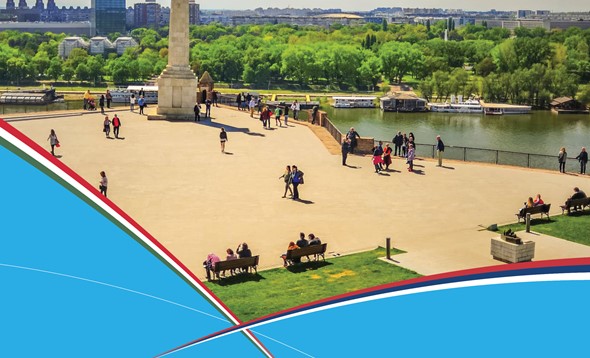
The second workshop in our series on research co-operation with other world regions focused on collaboration with Asia. It directly followed the GRC European Regional Meeting on 22 October in Belgrade. Asian and European research organisations shared good practices and opportunities to work together.
The European Regional Meeting of the Global Research Council served to collect European input to the discussion topics for the 2026 GRC Annual Meeting: Open Science and Sustainable Research. The 2025 European Regional Meeting was co-hosted with HUN-REN and SFRS.
This webinar explored the latest initiatives in monitoring and evidence gathering for open science and research assessment reform, and marked the launch of our new scoping review.
This webinar will explore the potential of rapid evidence synthesis in ensuring a fluid delivery of science-based solutions to policy makers and other stakeholders who work on the mitigation of and adaptation to climate change.
The culmination of several years of discussions, activities, positions, and events – Science Europe presents a Vision and Framework for Research Cultures that aims to synthesise research policy advances towards the shared objective of supporting knowledge advancement and enabling the quality and impact of research.
To mark the 10th anniversary of the International Day for Women and Girls in Science, and ahead of International Women's Day, this Science Europe webinar delves into the importance of integrating equity, diversity, and inclusion into research systems and processes. What role can research organisations play in supporting inclusive practices that encourage diverse research environments and empower underrepresented groups to drive scientific excellence?
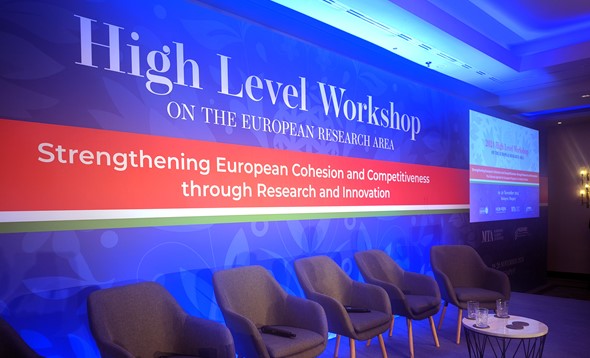
The 2024 High Level Workshop on ERA was co-organised with HUN-REN and MTA, with the support of the Hungarian Ministry of Culture and Innovation. It dealt with 'Strengthening European cohesion and competitiveness through research and innovation: the science agenda for European progress in a global context'.
The workshop on Attractive Careers in Research explored the common and different expectations for careers in research by different stakeholder groups, and the opportunities for action that exist based on these expectations. Existing good practice examples from within and outside of academia were presented and used as inspiration.
The first workshop in Tallinn on 30 October, following the European GRC Regional Meeting, will focus on Africa-Europe co-operation. Selected African and European countries will share existing good practices and opportunities for future co-operation.
Heads of European research organisations will meet at this Regional Meeting of the Global Research Council to discuss European contributions to the 2025 Annual Meeting. Similar meetings take place in the four other GRC regions: Americas, Asia–Pacific, Middle East/North Africa, and Sub-Saharan Africa.
Science Europe launched the report of its membership survey on the role of research funding and performing organisations in advancing open science and its links to research assessment. It reveals their strategic approaches and activities to evaluate, monitor, and collect evidence on research.
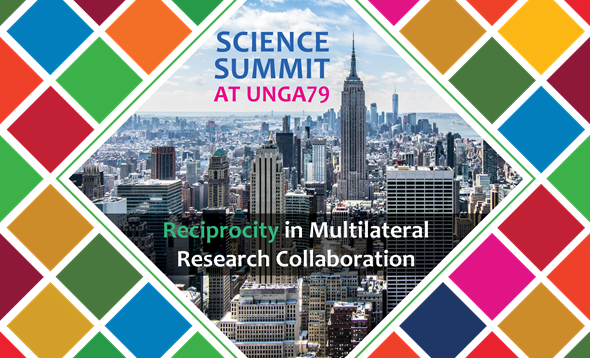
Science Europe and the Research Council of Norway (RCN) organised an event on reciprocity in multilateral research collaboration during the Science Summit at the 79th UN General Assembly. The objective was to address challenges to equitable and reciprocal global scientific collaboration.
Join this UNESCO webinar that will introduce and officially announce the Global Diamond Open Access Alliance, highlighting its vision, mission, and objectives, and to engage stakeholders in a collaborative effort to promote Diamond Open Access.
Science Europe's Greening Research Webinar Series sought to raise awareness, discuss solutions, and empower action to reduce the environmental impact of research activities by exploring its footprint, addressing challenges, and offering actionable steps for the future.
Series of events related to the co-design of Diamond Open Access Recommendations and Guidelines for Research Funders, Sponsors, and Donors