An important milestone for research assessment reform
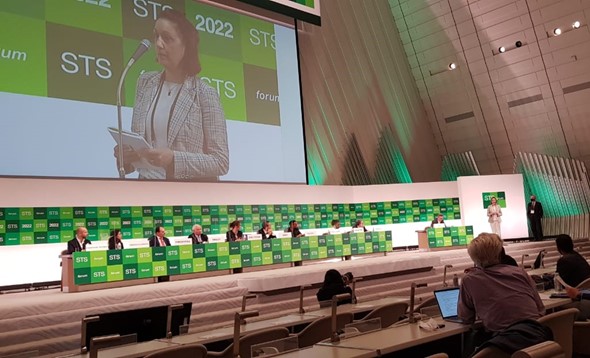
This morning (8 July), Science Europe & the European University Association, with the European Commission, hosted the 3rd stakeholder assembly of the reform of research assessment initiative.
Member-only content is available on this page. Please log in to view this content.
728 item(s) found
This morning (8 July), Science Europe & the European University Association, with the European Commission, hosted the 3rd stakeholder assembly of the reform of research assessment initiative.
Summer is nearly upon us, and we have prepared an overview of the many and varied activities carried out by Science Europe in the first six months of 2022 - a perfect reading list wherever you may be enjoying the summer weeks ahead.
Science Europe’s new values framework sets out ideals to aspire to, says Marc Schiltz.
For Science Europe, 2021 was a very important year: the association celebrated its 10th year of existence. Founded in 2011, it has grown into a respected and influential voice in the European research policy debate. Moreover, we published a new Strategy Plan for 2021–2026, which maps our collective objectives and sets a specific yet flexible action framework over the next five years.
Ahead of discussions on 4 July in the European Parliament, Science Europe highlights its concerns regarding the potential impact of the Digital Services Act on the research and education sectors and the legal uncertainty that it is likely to create.
On 22 June, the co-initiators of the Stick to Science initiative have sent an open letter to the President of the European Commission, Ursula von der Leyen, asking her to intervene urgently in the critical issue for science created by the delay of the association of the United Kingdom and Switzerland to Horizon Europe.
Science Europe will contribute to the EuroScience Open Forum (ESOF) 2022 with sessions on several key topics: the green and digital transition, research careers, open science, and the reform of research assessment systems.
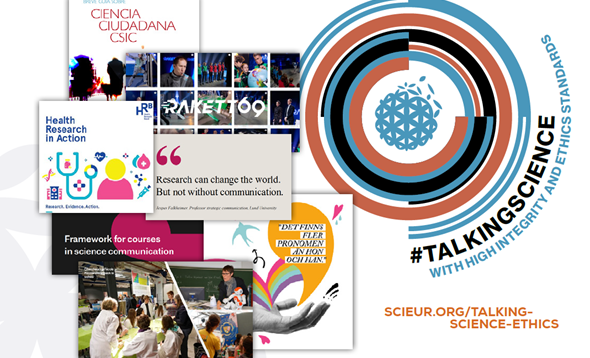
Science Europe launches a vision for science communication and commits to working with its member organisations to strengthen their capacity and to support their efforts to communicate research more effectively.
The Annual Meeting of the Global Research Council took place from 30 May to 3 June in Panama City. It was co-hosted by the National Secretariat of Science, Technology, and Innovation of the Republic of Panama (SENACYT) and the National Science Foundation of the United States (NSF).
At ESOF 2022 (13–16 July, Leiden, the Netherlands), Science Europe representatives will participate in four sessions. Besides, Sciences Europe is co-organising the Presidents’ reception with EuroScience. The programme also features a number of Science Europe Member Organisations.
On 10 June, the Competitiveness Council adopted Conclusions on Research Assessment and the Implementation of Open Science.
The first Workshop of a cycle of three events dedicated to Widening Participation and Spreading Excellence took place on 24 May. A main line of Science Europe is to promote ‘Brain Circulation’, as opposed to the ‘Brain Drain’ phenomenon.
The European reform of research assessment initiative is taking shape, and the Reform of Research Assessment Agreement is almost final. Soon, the process of establishing a coalition before the end of 2022 will start.
Science Europe launches a framework of shared values that serve as a guide to contribute to fostering a forward-looking research culture within the European Research Area, and globally.
The Council Conclusions are an important step in recognising the relevance of Open Science and reforming research assessment, which are two essential elements of the cultural shift that are necessary to put research quality and openness are the cornerstones of positive research cultures.
Ministers sign off joint positions on international cooperation, research assessment, open science and Horizon Europe missions in Luxembourg meeting
Science Europe welcomes the Council Conclusions on research assessment and open science as they recognise the need for a renewed approach to research policies and practices to evolve towards a more positive research culture.
We are pleased to welcome the National Research Foundation of Ukraine (NRFU) and the Hungarian Academy of Sciences (MTA) as members of Science Europe.
After months of negotiations, research stakeholders in the EU are getting close to an agreement on a set of principles and commitments for reforming the way research outputs are evaluated.
On the occasion of the Science Day organised by the National Research Foundation of Ukraine (NRFU), Science Europe and its Member Organisations again express their solidarity with the people of Ukraine.
As of 18 May, Science Europe counts 40 Member Organisations from 30 European countries. On that date, the General Assembly unanimously approved the applications of the Hungarian Academy of Sciences (MTA) and the Ukrainian National Research Foundation (NRFU).
Science Europe welcomes the DFG position paper "Academic Publishing as a Foundation and Area of Leverage for Research Assessment" on two important and timely topics.
Curiosity is the driving force of discoveries and research. To inspire youth to discover the wonderful world of science and research, ETAG held a national Student Researcher's Festival on 12 and 13 April.
The 2021 Galileo Galilei Medal was awarded to Alessandra Buonanno, Thibault Damour, and Frans Pretorius.