29
Nov.
2017
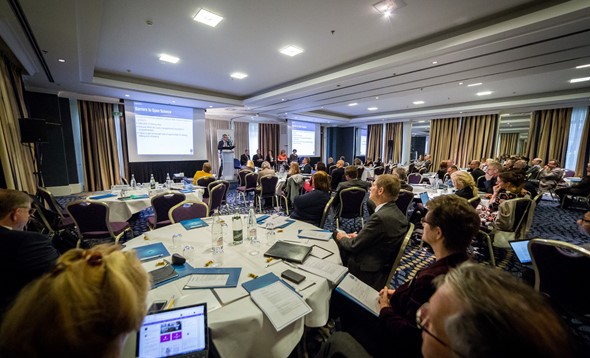
Science Europe Symposium 2017
The 2017 Science Europe Symposium took place in Brussels, Belgium. The topic was 'Science Without Borders'.


Member-only content is available on this page. Please log in to view this content.
33 item(s) found

Science Europe has submitted its response to the European Commission’s Call for Evidence on the Skills Portability Initiative, outlining how better recognition and portability of research skills can strengthen mobility and careers across the European Research Area.

Science Europe has responded to the European Commission’s public consultation on the proposed European Research Area (ERA) Act, setting out the collective views of its Member Organisations on how the legislation can effectively strengthen framework conditions for research and innovation, while safeguarding academic freedom, institutional autonomy, and the diversity of national research systems.
The Roadmap, approved by the Science Europe General Assembly in November 2013, is Science Europe’s action plan to contribute to the elements of a successful research system. It acts as a framework for voluntary collective activity, providing a long-term strategy for the association. The ‘Priority Action Areas’ are those in which Science Europe members believe that there is a potential to achieve tangible and substantive progress, and where they can add real value by working together.
The 2017 Science Europe Symposium took place in Brussels, Belgium. The topic was 'Science Without Borders'.
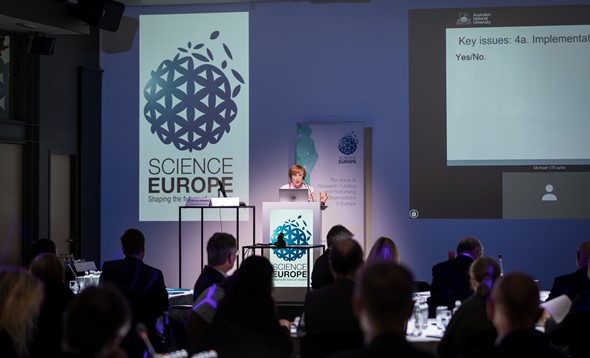
The 2018 Science Europe Symposium took place in Brussels, Belgium. The topic was 'Interdisciplinarity'.

Interdisciplinarity is increasingly used to tackle complex scientific questions and address large societal challenges. At the same time, the evaluation of interdisciplinary research proposals poses a set of problems, ranging from missing common standards and criteria to shortages of peer reviewers with experience in evaluating interdisciplinary research. At its third Symposium, Science Europe and its Scientific Advisory Committee brought together researchers and other experts experienced in interdisciplinarity with high-level representatives from Science Europe’s Member Organisations, who fund and perform such research.
The new statement on Research Culture envisages an ERA that focusses on the quality of research and its processes, supports scientific freedom, and promotes social diversity and inclusion, acknowledging that these conditions will, in turn, foster a productive research system.
This workshop was convened by the Science Europe Scientific Committee for Physical, Chemical, and Mathematical Sciences to explore issues surrounding the concept of ‘convergence’ and its potential relevance to, and implications for, research funding organisations and research performing organisations in Europe. The aim of this exploratory workshop was to provide a forum for debate and discussion, rather than to arrive at specific conclusions or formulate policy recommendations. The workshop, attended by some 45 delegates, took the following format: four keynote speakers with expertise relevant to the topic of convergence gave presentations, followed by three short interventions. Delegates were then split into three groups which sat in parallel to explore the areas of governance, tools and infrastructures, and training and careers. Again this was followed by an open discussion.