-
Share on




Conference on Strengthening Public Trust in Science
Analysing the Challenges and Identifying Solutions


The pursuit of scientific knowledge plays an essential role in tackling current societal challenges, such as health crises and climate change, and in driving societal progress. Trust in the scientific process and research outcomes is therefore crucial for the development of evidence-based policies and informed, democratic decision making.
About the conference
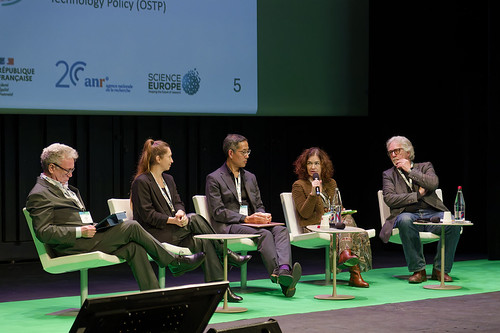
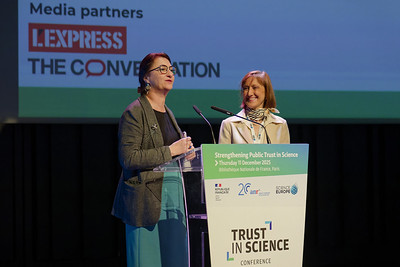
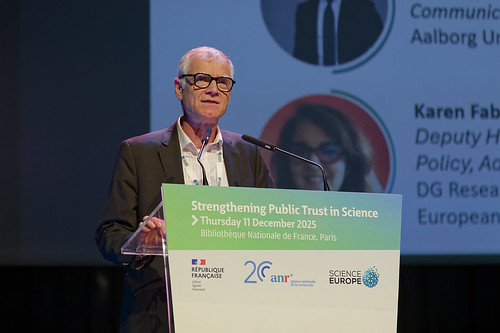
Science Europe and the French National Research Agency (ANR) organised this conference to discuss how research organisations, including those who fund and/or perform research, can respond to growing concerns about and reinforce confidence in the research process and its outcomes.
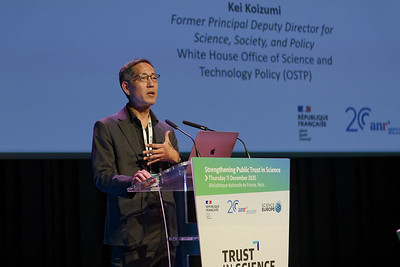
The conference took place on 11 December 2025 at the Bibliothèque Nationale de France in Paris.
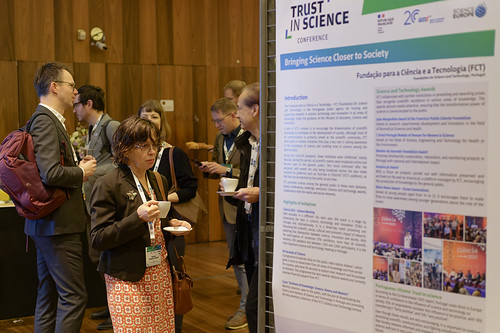
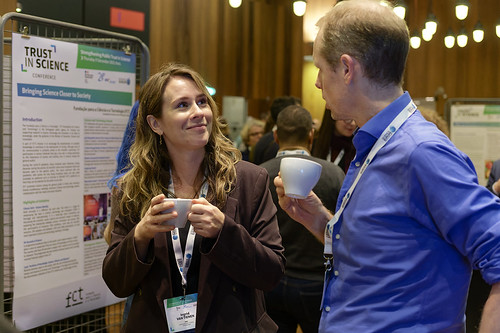
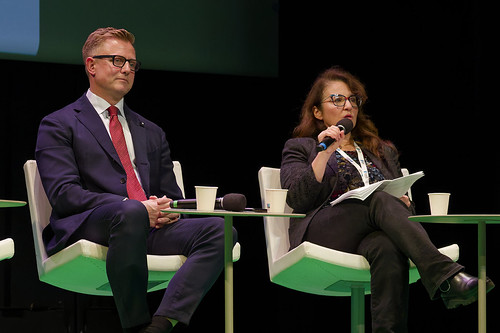
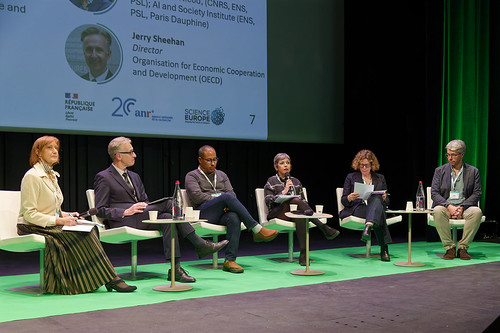
The event brought together policy makers, representatives of research funding and performing organisations, scientists, and communication experts to:
- Identify the factors that undermine public confidence in science, scientists, and research institutions.
- Examine the dynamics between science, society, and the media in the dissemination of knowledge, scientific debates, and public engagement.
- Examine how to strengthen trust through public engagement.
- Develop concrete recommendations for research funding and research performing organisations and the media to enhance public understanding of the scientific method and raise policy makers’ awareness of the importance of strengthening trust in science.
Recommendations for Strengthening Trust in Science
1. Reinforce integrity and transparency across the research ecosystem
Uphold rigorous standards for ethics, openness, and accountability in research and funding practices.
2. Promote scientific literacy and understanding of the research process
Improve public understanding of how science works, including methods, uncertainty, and evidence.
3. Embed trust-building into research policy, governance, and funding frameworks
Make public engagement and communication a core part of research systems and funding criteria.
4. Support and protect researchers in the public sphere
Equip and safeguard researchers to engage confidently and responsibly with the public.
5. Foster collaboration and co-production in a complex information environment
Encourage cooperation across sectors to strengthen credibility and counter misinformation.
6. Ensure clarity of roles and responsible science communication
Promote transparent communication and clearly distinguish roles across science, media, and policy.
7. Safeguard the independence of science in policymaking
Protect academic freedom and ensure transparent use of scientific evidence in decisions.
8. Strengthen democratic participation and citizen engagement
Involve citizens early to enhance legitimacy, dialogue, and trust in research and innovation.
__________________________________________________________________